
Caribbean Exporters: Stop Losing to New US Tariffs – 5 Steps to Diversify Your Markets in 2026

The new 10% baseline US tariffs aren't just a policy shift: they're a wake-up call. For Caribbean exporters who've built their entire business model around American market access, these tariffs represent an existential threat. Guyana's oil sector is already facing a crushing 38% tariff rate, and other industries are bracing for similar impacts.
But here's the reality check: this isn't the end of your growth story. It's the beginning of a smarter one.
The Trump administration's "America First" policies have created immediate pain, but they've also exposed a dangerous over-reliance on a single market. Smart Caribbean businesses are already pivoting, and the early movers are discovering opportunities that dwarf their previous US-focused strategies.
The Real Cost of Standing Still
Let's be brutally honest about what's happening. Every month you delay diversification, competitors in Asia, Europe, and Africa are capturing market share you could have claimed. While you're calculating tariff losses, they're building relationships in the $3 trillion Africa-Caribbean trade corridor that's exploding right now.
The question isn't whether you can afford to diversify: it's whether you can afford not to.

Step 1: Audit Your US Exposure – Face the Numbers
Stop guessing. Start calculating.
Your first move isn't strategic: it's mathematical. You need to understand exactly how much these tariffs are costing you, not just this quarter, but over the next three years.
Create a tariff impact spreadsheet that includes:
- Current product mix exported to the US
- New tariff rates for each product category
- Annual margin impact at current volumes
- Projected volume decline due to reduced competitiveness
- Total revenue at risk over 24 months
Most Caribbean exporters discover they're looking at 15-30% margin compression once they run the real numbers. That's not sustainable, and it's certainly not competitive.
Pro tip: Factor in potential retaliatory measures and escalating tariff scenarios. The current 10% baseline could easily become 15-20% if trade tensions intensify.
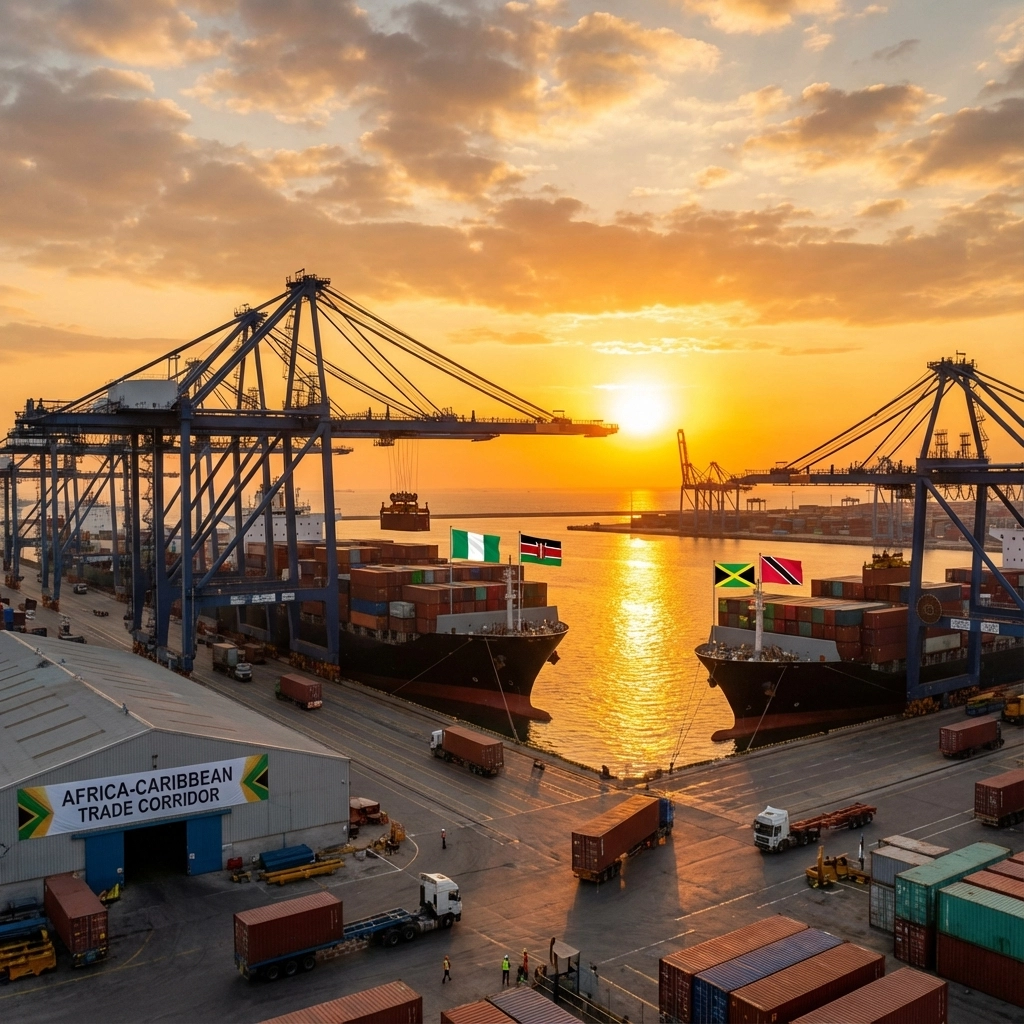
Step 2: Pivot to the Africa-Caribbean Corridor – Your $3 Trillion Opportunity
Here's what most Caribbean businesses don't realize: African markets are actively seeking Caribbean products right now.
The Africa-Caribbean trade relationship is experiencing unprecedented growth, driven by:
- African middle class expansion creating demand for Caribbean food products, spirits, and cultural exports
- Resource complementarity where Caribbean expertise in tourism, financial services, and agriculture aligns with African development priorities
- Reduced competition as traditional suppliers focus on other markets
Countries like Nigeria, Ghana, and Kenya are importing Caribbean rum, spices, and processed foods at record levels. Meanwhile, Caribbean businesses are discovering African markets for tourism services, educational programs, and technology solutions.
The key is approaching Africa strategically, not opportunistically. This means understanding local regulations, cultural preferences, and distribution networks before you ship your first container.
Step 3: Boost Regional Integration – CARICOM is Your Safety Net
Stop thinking like competitors. Start acting like partners.
CARICOM's food security initiatives aren't just policy documents: they're your roadmap to tariff-free regional growth. The Caribbean food import bill exceeds $4 billion annually, and most of that money is flowing to external suppliers who could be replaced by regional producers.
Actionable regional integration strategies:
- Cross-border supply chain optimization: Partner with businesses in other Caribbean islands to create economies of scale
- Regional brand development: Market "Caribbean-made" as a premium category across all member states
- Shared logistics networks: Reduce shipping costs by coordinating with other exporters on container sharing and route optimization
The CARICOM Single Market and Economy (CSME) framework provides preferential access that effectively creates a 6 million person tariff-free zone. That's larger than many individual US states and growing faster than the US economy.
Step 4: Strategic Market Entry in Canada – Your Stable Alternative
Canada isn't just geographically close: it's strategically smart.
Canadian consumers have deep cultural ties to the Caribbean through immigration, tourism, and shared Commonwealth history. More importantly, Canada's trade policy is predictable, stable, and actively seeking to diversify away from US dependence.
Why Canada works for Caribbean exporters:
- Established Caribbean diaspora of over 600,000 people creating built-in demand for authentic products
- Stable regulatory environment with transparent import requirements and predictable costs
- Growing economy with consumers willing to pay premium prices for quality Caribbean products
- Strategic location for further distribution into North American markets without US tariff exposure
The key is positioning your products for the Canadian premium market, not trying to compete on price. Caribbean rum, coffee, spices, and artisanal products command significant premiums in Toronto, Vancouver, and Montreal.

Step 5: Use Market Intelligence – Data Over Intuition
Your gut got you this far. Data will get you to the next level.
The biggest mistake Caribbean exporters make is expanding based on assumptions rather than intelligence. Successful market diversification requires local networks, cultural understanding, and risk mitigation strategies.
Essential market intelligence components:
- On-the-ground partnerships in target markets who understand local business culture
- Real-time trade data showing import trends, competitor pricing, and regulatory changes
- Cultural adaptation strategies that go beyond translation to true localization
- Risk assessment frameworks that identify political, economic, and operational risks before they become problems
This isn't about hiring expensive consultants: it's about building systematic intelligence gathering that informs every expansion decision.
Smart exporters are leveraging trade missions, industry associations, and government trade offices to build these intelligence networks cost-effectively.
The Window is Closing
Every successful business reaches an inflection point where the old strategies stop working and new approaches become essential. For Caribbean exporters, that moment is right now.
The businesses that will thrive in 2026 and beyond are the ones making diversification moves today, while their competitors are still hoping US tariff policies will somehow reverse themselves.
The Africa-Caribbean corridor is expanding rapidly. Canadian market opportunities are becoming more competitive as other international suppliers discover them. Regional integration benefits are flowing to early adopters who establish strong CARICOM partnerships now.
Ready to stop losing to tariffs and start winning in new markets?
The World Trade Commission has guided Caribbean businesses through successful expansions into Africa, Canada, and regional markets for over two decades. Our market entry strategies and local partnership networks help you avoid the costly mistakes that derail most international expansion efforts.
Contact us today to discuss your specific diversification strategy and discover which markets offer the highest returns for your particular products and capabilities. The tariff squeeze doesn't have to be your breaking point( it can be your breakthrough moment.)
Comments are closed